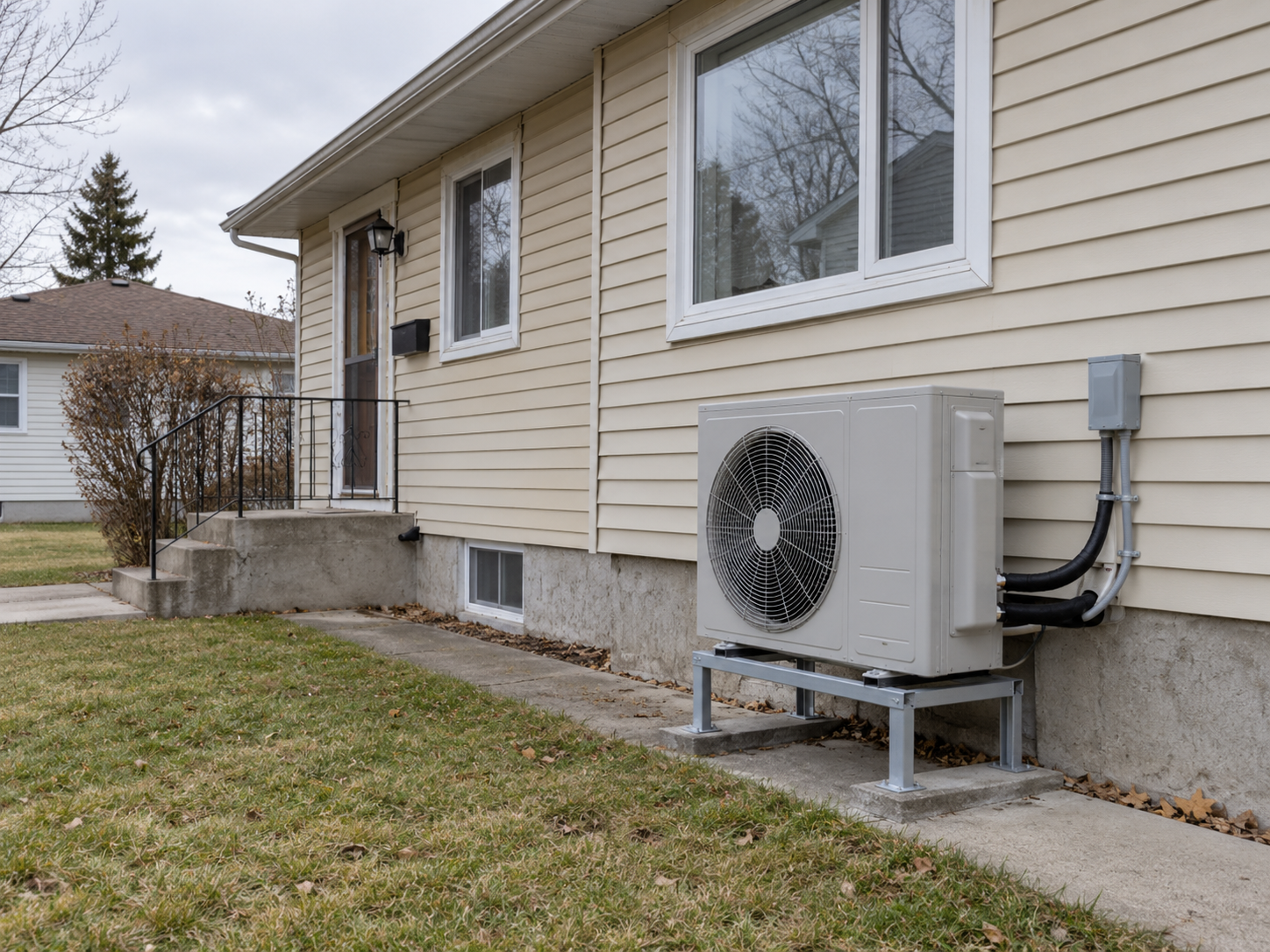
Prime Minister Mark Carney’s latest announcement further establishes household energy upgrades as a priority on the federal agenda. The October 8 package includes new heat pump rebates and support for energy-efficiency improvements in rental buildings, adding to government and utility efforts already underway to help improve homes, manage energy costs, and support a growing electricity system.
In B.C., those opportunities are becoming a bigger part of how households interact with energy. People are being encouraged to improve their homes’ efficiency, consider different heating technologies, and take a more active role in managing electricity use. These investments can benefit households and the broader energy system, but they also ask people to understand more and make decisions they may not have encountered before.
For Kambo Energy Group’s Empower Me® program, helping people work through those decisions has been part of the job since 2012.
Empower Me began in B.C., building on Kambo’s work delivering BC Hydro and FortisBC’s Energy Conservation Assistance Program, the province’s low-income energy efficiency program. Through that work, we saw the value of pairing home upgrades with education and practical support that built understanding and capacity while also encouraging participation in the program. People wanted to understand their bills, learn how to keep their homes comfortable, and find out which programs applied to them. For households unfamiliar with Canadian energy systems or looking for information in another language, having someone to talk to could make that process easier.
Today, Empower Me continues working through locally hired, multilingual Energy Mentors and community organisations that residents already turn to for support. Mentors help people understand their energy use, explore available programs, and work through the steps to participate. Sometimes that happens in a workshop. In other scenarios, someone needs a one-on-one conversation about their home, help with an application, or a contact they can return to later.
Over the years, the subjects of those conversations have changed alongside the energy system.
Utilities have long helped customers reduce energy use through demand-side management, or DSM. Insulation, efficient equipment, and practical changes in the home remain important parts of that work. The conversation also includes how customers can help manage when electricity is used, through options such as connected thermostats and demand-response programs.
That brings new questions into someone’s kitchen or living room. A homeowner considering a heat pump may want to know whether it will keep their home warm in a cooler climate, what it will cost to run, and how to find a qualified contractor. Someone considering a demand-response program may ask how thermostat adjustments work, whether they can override a change, and what benefit they can expect.
These are reasonable questions to ask before making a decision about a home. Understanding the household benefit, as well as the contribution to the electricity system, can help people decide whether they want to participate.
The people we work with approach those decisions from different starting points. A newcomer may be learning how their heating system works while experiencing a Canadian winter for the first time. A senior may prefer to talk through a program rather than research it online. A renter may be interested in reducing their bills but have limited control over the equipment in their home.
We cannot tell what someone needs from their age, income, or background alone. Working with community partners gives us a better place to begin that conversation.
Settlement agencies, cultural associations, faith centres, schools, and food banks have relationships that often predate any energy program. Much of the trust that makes Empower Me’s work possible belongs to those organisations and the people within them. Our role is to bring energy knowledge into those relationships and listen to what households are asking.
Those connections remain useful as programs change. An organisation that first hosted a workshop about utility bills can later become a place to learn about cooling support or heating system upgrades. Residents have somewhere familiar and trusted to bring questions without having to find a new source of advice each time.
For one participant, that connection helped her access relief from extreme heat. A single mother who came to Canada from China described sleeping outside in a tent with neighbours during the 2021 heat dome because her townhouse was unbearably hot. An Empower Me Program Coordinator later told her about an available air-conditioning program and helped her apply.
“I wish everyone can receive assistance, so we won’t have to worry about the heat during future summers,” she said.
Her experience shows how community relationships can help connect public investment with the people it is intended to support. The program made cooling available; a conversation helped her understand the opportunity and take the next step.
The same kind of support has a place as households consider new ways to manage energy use. A utility may be working towards a conservation or peak-demand target, while a resident is thinking about keeping an elderly parent warm or managing an unpredictable bill. Community conversations help explain how an offer relates to those everyday concerns. They also provide useful context for the people designing and delivering programs.
As Canada’s and B.C.’s energy systems change and new supports become available, the questions households bring to Empower Me will change too. A conversation that once focused on understanding a bill may now include choosing a heating system or deciding whether to join a demand-response program. Our relationships with community partners give people a familiar place to work through what those choices mean for their home and budget. What we hear can also help our government and utility partners understand household priorities and support participation as new opportunities take shape.

Copyright © 2024 Kambo Energy Group Inc. | Empower Me and Kambo are registered trademarks of Kambo Energy Group Inc.